

ESPP Doctoral Student Leo Baldiga Publishes in Journal of Rural Studies on Life After an Aquaculture Boom in Thailand
September 29, 2026

ESPP dual major doctoral student Leo Baldiga is first author of a new open-access study in the Journal of Rural Studies that asks a question most research on crop booms has left unanswered: what happens after the boom?
Over the past 15 years, researchers have documented how boom crops such as oil palm, rubber and shrimp have spread rapidly across Southeast Asia, and in many cases, collapsed just as quickly. Most of these studies stop at the peak of the boom or right after the bust, where Central Thailand presents a rare long-term case. Since the 1980s, shrimp and fish farmers in the provinces around Bangkok have lived through a series of booms and busts driven by explosive market demand, disease outbreaks, and economic shocks. However, unlike the remote frontier regions where most crop booms happen, this is a long-settled farming area on the edge of a megacity.
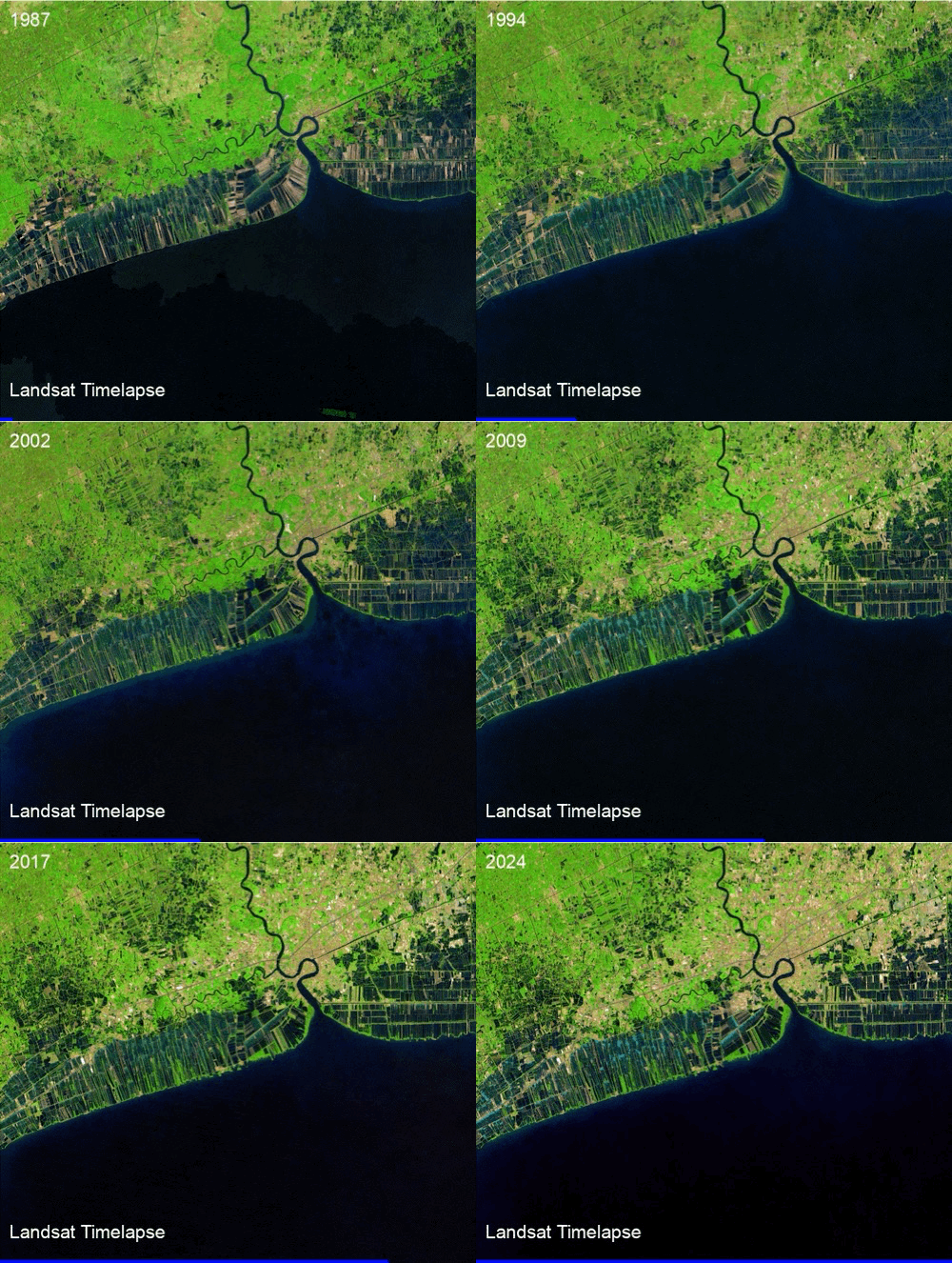
The team combined 30 years of satellite imagery, a survey of 455 farms, and in-depth interviews with 40 experienced farmers. They found that aquaculture in Central Thailand hasn't collapsed. It has settled into a stable, lasting system, which the authors call "entrenched persistence."
What the researchers found
- The swings have gotten smaller. Each shock has hit less hard than the one before, and total pond area has kept growing slowly while production has leveled off.
- Land access has stayed stable. Thailand's formal land titling system, secure tenancy, and a well-established rental market supplied by absentee landowners in the city have let farmers keep and expand their holdings. Land also tends to stay within extended families from one generation to the next: about 40% of surveyed parcels were inherited.
- Farmers have kept adapting. After the 1997 Asian financial crisis, and again after the early mortality syndrome outbreak of 2012–14, many farmers moved toward less intensive systems. They raise shrimp alongside fish, stock ponds at lower densities, and use cheap local feeds. Instead of maximizing yield per pond, they reduce their exposure to disease and price shocks. The researchers suggest this may be one reason Central Thailand weathered the 2012–14 outbreak better than the intensive, single-species farms in Southern and Eastern Thailand.
- Thai consumers are a growing market. As incomes have risen, domestic shrimp consumption has grown by 73% since 2016. More farmers now sell smaller shrimp straight to local buyers, weekly pop-up markets and restaurants. This earns them more per kilo and protects them from swings in export prices.
The authors argue that several forces keep this system stable: rising urban demand for high-value food, an aging rural workforce, and few secure jobs outside farming, all typical of Thailand's position as a middle-income country. Farmers' own choices to diversify matter just as much.
Why it matters beyond Thailand
India, Vietnam and Ecuador are in the middle of their own export-driven shrimp booms. Central Thailand's peri-urban setting is unusual, but its experience suggests that with the right conditions, a crop boom doesn't have to end in dispossession. Those conditions include secure land rights, working rental markets, access to credit, and support for diversification and adding value. It can instead leave behind a varied and resilient farming economy.
Co-authors include Ben Belton (MSU and the International Food Policy Research Institute), Lin Yan and David P. Roy (MSU Center for Global Change and Earth Observations), Meicheng Shen (MSU), Sansanee Wongvoralak (independent researcher, Thailand) and Orachos Napasintuwong (Kasetsart University). The research was funded by NASA's Land Cover/Land Use Change (LCLUC) program.
Read the full article here: Baldiga, L., Belton, B., Wongvoralak, S., Napasintuwong, O., Yan, L., Shen, M., & Roy, D. P. (2026). What happens after the boom? Aquaculture, land use change, and smallholder resilience in Central Thailand. Journal of Rural Studies, 128, 104417.
Congratulations, Leo!
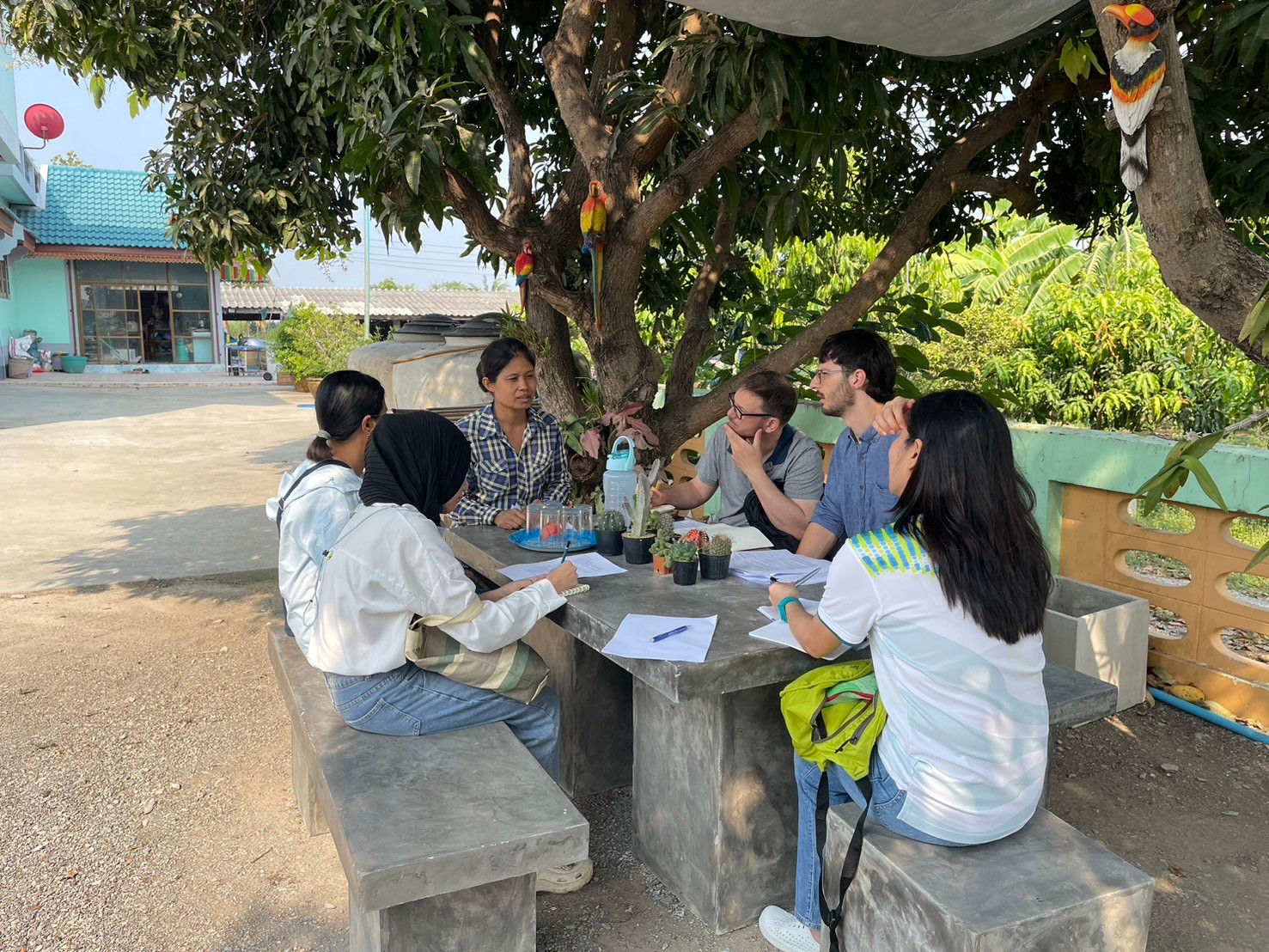
The team (Leo, Ben, and Orachos) interviews a fish farmer at their home in Suphanburi Province.
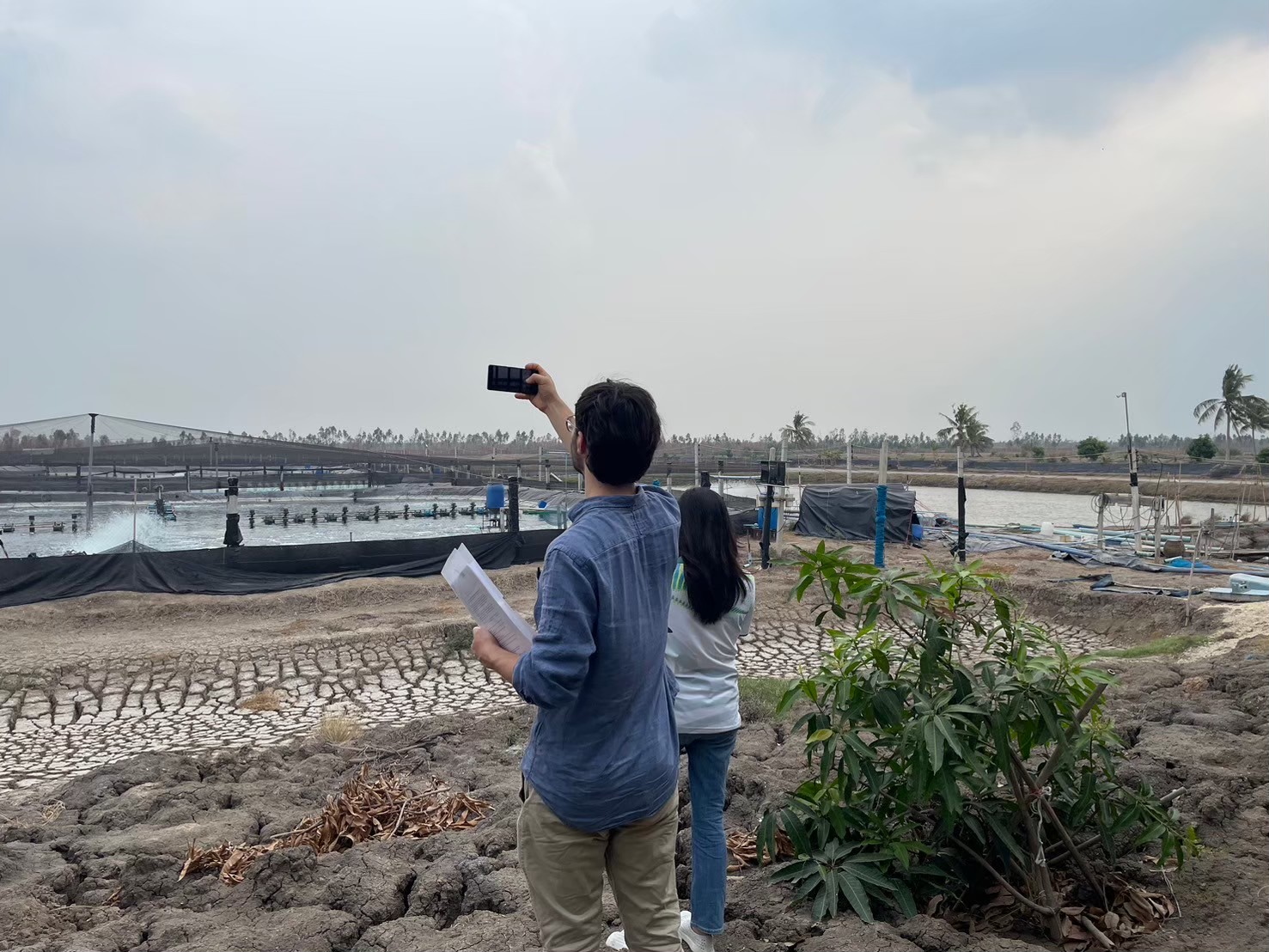
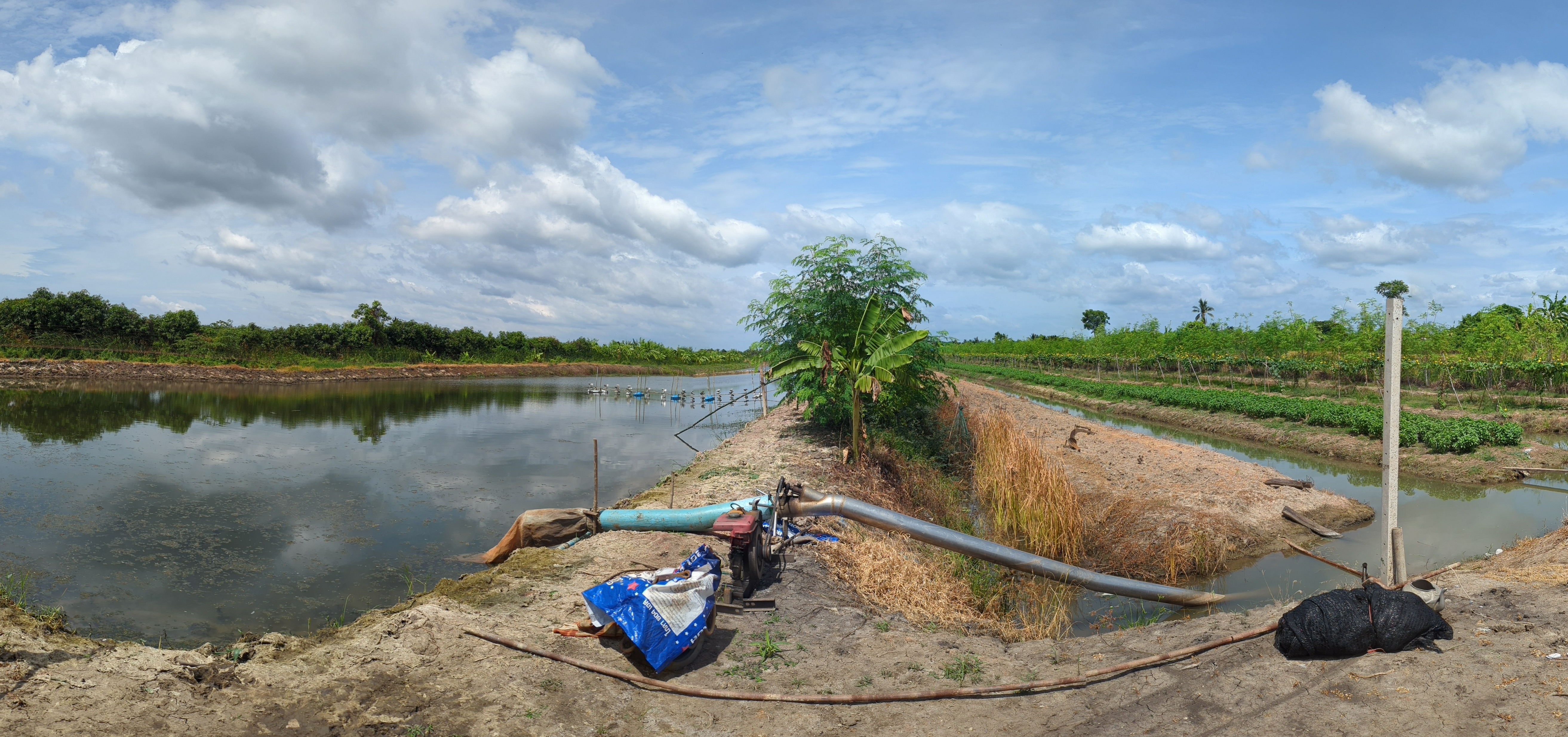
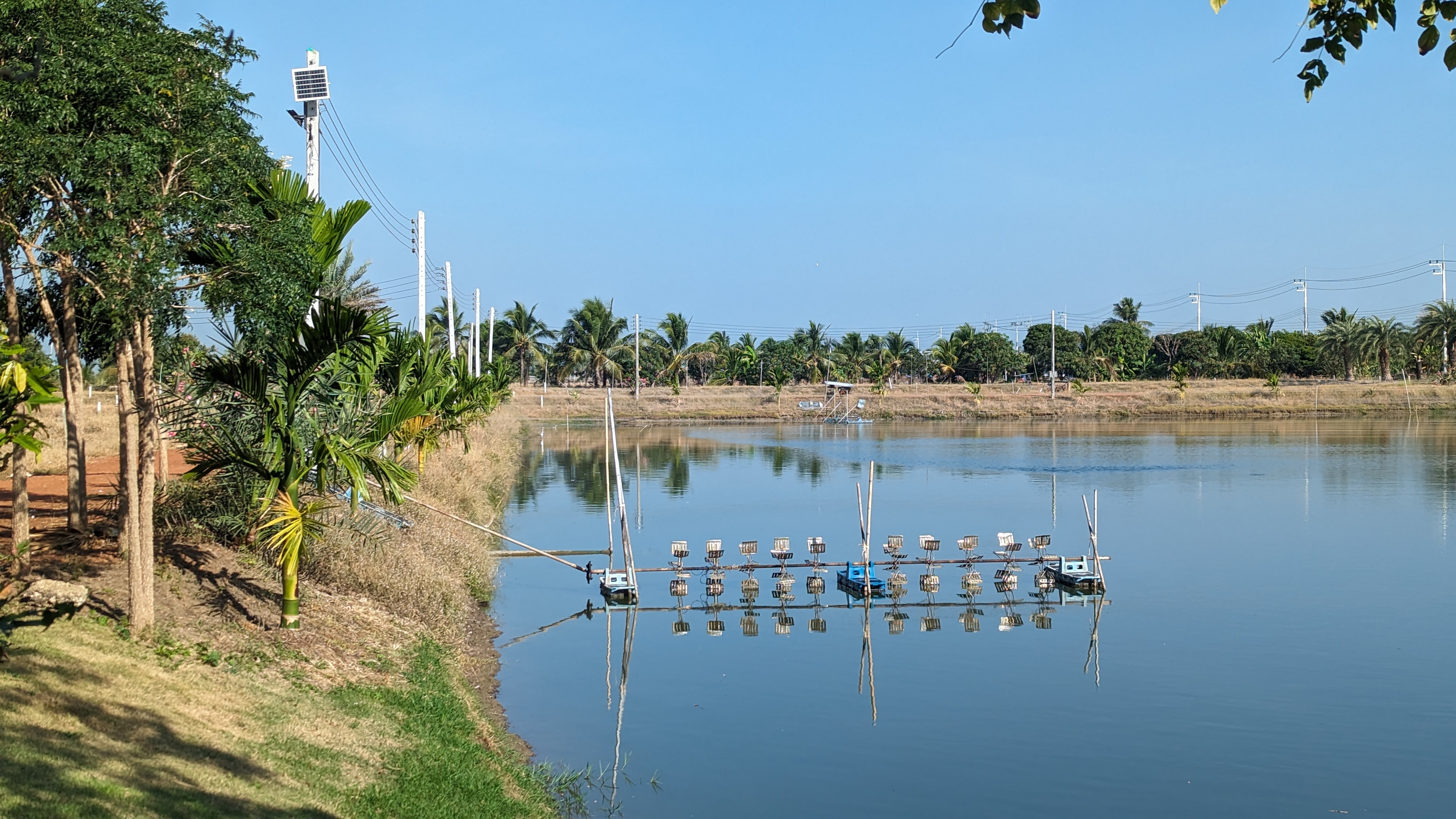 Semi-intensive ponds still use aeration, but farmers often reduce the number of hours they use it daily to save on energy costs.
Note: This news piece was summarized by AI, edited and approved by the author.